Our Latest Citizen Science Initiative: Uncovering the Moral Values of Stories
“All stories teach.” – Wayne Booth.
What makes stories different from rules or commandments is that they communicate lessons and values through the lived experiences of characters. Stories don’t just teach us, “A kindness is never wasted.” They show what that feels like to experience. Stories highlight the complex life situations we face and the concrete outcomes that follow from our choices.
In The Lessons of Stories citizen scientists will help us annotate “Moral Choice Cards” that provide information drawn from real stories from around the world about the goals and opposing forces characters face. Each card contains a concrete situation in which a character in a story strives to achieve a particular goal and whether they were successful. In each case volunteers’ role will be to help identify the specific values that are promoted or sacrificed through these scenarios.
Workflow 1: Moral Values
In this workflow, you will first be asked whether the character achieved their goal and then the following two questions:
According to the result of the story, what value or values are upheld or rewarded?
According to the result of the story, what value or values are rejected or sacrificed?
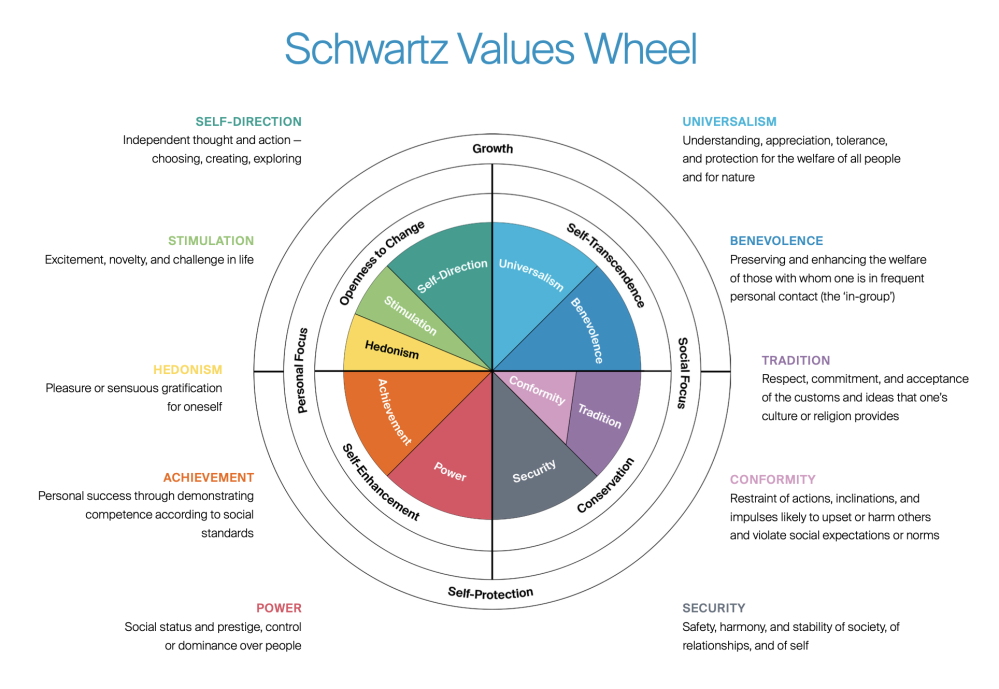
To answer, you will be given a list of ten values to choose from that are drawn from Schwartz’s Theory of Basic Human Values:
- Achievement — Personal success
- Benevolence — Caring about the welfare of others
- Conformity — Avoid violating social expectations
- Hedonism – Personal pleasure, happiness, or enjoyment
- Power — Social status, prestige, authority
- Security — Safety, harmony, and stability
- Self-Direction — Independent thought and action
- Stimulation — Excitement, novelty, or challenge
- Tradition — Respect for customs and ideas from one’s culture or religion
- Universalism — Appreciating the values and welfare of all people and the natural world
The goal is to understand which values are upheld or rejected based on the results of the story (not what the character intended, but what actually happened).
Workflow 2: Moral Opponents
In this workflow, using the same Moral Choice cards, we will ask you the following question:
What is the main force challenging or preventing the character’s pursuit of their goal?
You will have the option of choosing from among different categories like an opposing person, physical force, the law, etc. In this workflow, we want to understand not just rewarded or sacrificed values, but the kinds of forces that stories use to represent these tensions.
How Are The Characters Chosen?
Our aim is to explore storytelling at its broadest scope possible. We will be drawing characters from:
- Famous books
- Famous movies and TV shows
- World literature
- Fan fiction
- Genre fiction (Romance, SciFi, Mystery, YA, Bestsellers, Prizewinners)
- Folk tales
We welcome suggestions for specific works or types of stories to include! Please get in touch!
AI Usage in the Making of the Cards
Every story in this project is real and was written by people. AI did not write them, and it does not make any of the judgments we ask of you. We use AI for one step only: condensing novels, films and folktales into our Moral Choice Cards. Doing this by hand for thousands of stories would not be feasible. Each card shows the story’s title, so you can compare it with the original. The cards never suggest which values are involved. That decision is entirely yours.
In order to make the cards we prompt a language model (currently: GPT-5.6) to generate the scenarios on the cards given a full work or a detailed summary of a work. The process is rigorously tested and reviewed to ensure the accuracy of cards and their readability. However, if a card seems to misrepresent the story or is unclear, please choose “The Card is Unclear” and/or tell us on Talk.
Where Do The Value Systems Come From?
To label values associated with different characters’ actions, we will be using Schwartz’s Theory of Basic Human Values, developed by the social psychologist Shalom Schwartz. Working with survey data from people in dozens of countries, Schwartz found that the things people care about tend to fall into a small number of recurring categories — things like looking after the people close to you, being fair to strangers, keeping yourself safe, following the rules of your community, being free to make your own choices, seeking out new experiences, enjoying yourself, getting ahead, and having influence over others.
What makes this framework useful for reading stories is that these values naturally pull against each other: you often can’t chase adventure and stay safe at the same time, or put your own ambitions first and still keep faith with your family. Characters in stories are constantly caught in exactly these tensions, and the choices they make — and how the story treats those choices — tell us which values are being rewarded and which are being given up.
In each workflow you will encounter a randomly selected value from Schwartz’s list of ten values with a brief explanation defining what the official label means. We also provide longer explanations in the Help Button.
What Kind of Analysis Will This Allow?
Your annotations will help us understand the unique ways that different stories enact moral tension and the kind of competing frameworks one commonly finds in stories. Scholars have long argued that stories are useful for moral reasoning because of the way they don’t prescribe what to do (“be kind to your neighbour”), but rather enact that message through a particular character’s experience. In stories, we see values in action — which also means we see how characters negotiate opposing forces or values. Storytelling is an excellent way for societies to create complex frameworks for shaping collective moral action. Because stories can be quite long, we have chosen to distill them down into concrete moral choices that characters make and ask your help in identifying the values associated with their choices.
The goal of our research is to study the results of your annotations. One of the main limitations surrounding the study of literature and storytelling has always been scale. There are too many stories to read by hand for a single researcher. With your help, we can now scale this research to many thousands of examples to better understand the broader social effects of storytelling.
For example, we will be able to study what values are often paired in conflict — when certain values are chosen or rewarded, what is sacrificed? Do we see different media or cultures emphasizing different value conflicts? Given that we are focusing on particular characters, we can also identify deeper information about those characters and pair them with their value conflicts. This could for example help us identify relationships between character types and moral experience/tension. Finally, we will be able to study the kinds of social impediments that different books or cultures favour. When characters do or do not achieve their goals, who or what is stopping them from doing so? Tradition, customs, financial constraints, family bonds, etc.? Your annotations will help us understand the context in which these value choices are being made and potentially obstructed.